Thank you for writing to us. One of our executive will reach back to you through your submitted medium. In case there’s an urgency, feel free to connect over WhatsApp for faster response.
Prefer calling? Dial +918048035775 (International callers) or 08048035775 (Indian callers).
SS Self-Priming Pump – Denwell Fluid Controls
Denwell Fluid Controls offers SS Self-Priming Pumps as part of its self-priming pump range. The company's official website lists SS Self-Priming Pump alongside PP, CI, mud-handling, and chemical self-priming pump options. Denwell identifies itself as a manufacturer and exporter of industrial centrifugal and axial-flow pumps.
SS Self-Priming Pump
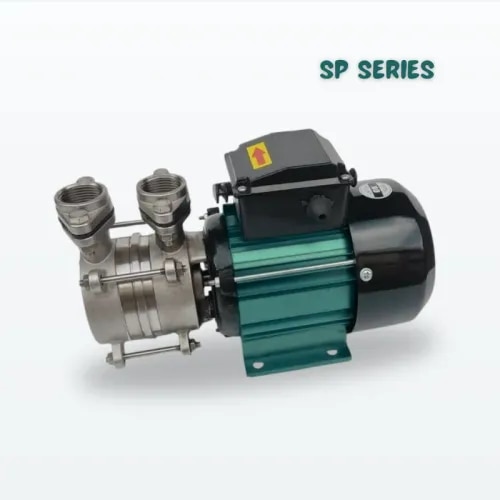
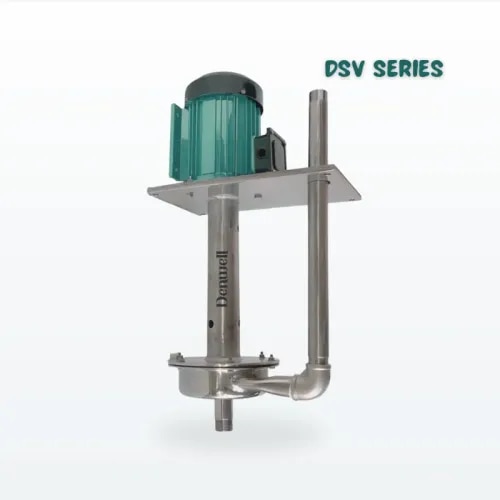
The SS Self-Priming Pump is a stainless-steel centrifugal pump designed for applications where the pump needs to establish suction without requiring manual priming each time under suitable installation conditions.
The self-priming design is particularly useful in fluid-transfer systems where the pump is installed above the liquid source or where air may be present in the suction line. Stainless-steel construction can provide corrosion resistance and durability for applications involving compatible industrial liquids.
Denwell's available product information identifies an SS 316 Self Priming Pump and lists it for water usage, with a standard-size configuration and a listed flow rate of up to 1000 LPM on its product catalogue.
Key Features
Stainless-steel construction
Self-priming centrifugal pump design
Suitable for water and compatible industrial liquids
Designed for applications where suction-line air may be encountered
Robust pump construction
Suitable for industrial fluid transfer
SS 316 option available in Denwell's listed product range
Easy integration into suitable pumping systems
Application-based pump selection
Manufactured and supplied by Denwell Fluid Controls
Applications
SS Self-Priming Pumps can be considered for:
Industrial water transfer
Water supply systems
Process-water transfer
Wastewater applications
Drainage and liquid transfer
Industrial circulation
Chemical applications where stainless-steel compatibility is confirmed
Pharmaceutical applications where the selected construction is appropriate
General industrial fluid handling
For chemical or aggressive liquids, the stainless-steel grade, mechanical seal, temperature, concentration, and chemical compatibility should be evaluated before selecting the pump.
Product Information
Denwell's external product catalogue lists an SS 316 Self Priming Pump with a standard size, water usage, and a listed maximum flow rate of 1000 LPM. Because detailed performance curves were not available in the official self-priming category page, final flow/head selection should be confirmed with Denwell for the actual duty point.
Q&A – SS Self-Priming Pump
1. What is an SS Self-Priming Pump?
An SS Self-Priming Pump is a stainless-steel centrifugal pump designed to evacuate air from the suction line and establish liquid flow under suitable operating and installation conditions.
2. How does a self-priming pump work?
A self-priming pump uses its casing and impeller arrangement to remove air from the suction line and create the conditions required for liquid to enter the pump. Once primed, it operates as a centrifugal pump.
3. What does SS mean in an SS Self-Priming Pump?
SS means stainless steel. Denwell's listed product range includes an SS 316 Self Priming Pump.
4. What is the advantage of a self-priming pump?
A self-priming pump can simplify installations where the pump is located above the liquid level or where air can enter the suction line. It reduces the need for repeated manual priming when the pump is operated within its intended conditions.
5. Where are SS Self-Priming Pumps used?
They can be used for water transfer, industrial fluid handling, wastewater-related applications, drainage, process-water transfer, and other compatible liquid-handling duties.
6. Can an SS Self-Priming Pump handle chemicals?
It depends on the chemical and pump construction. Stainless-steel compatibility, concentration, temperature, seals, and other wetted components should be checked before using the pump for chemical transfer.
7. Is the Denwell SS Self-Priming Pump available in SS 316?
Yes. Denwell's product catalogue specifically lists an 'SS 316 Self Priming Pump.'
8. What is the listed flow capacity of the SS 316 Self-Priming Pump?
Denwell's external product listing specifies a maximum flow rate of up to 1000 LPM. Actual flow depends on the selected model, head, piping system, liquid characteristics, and operating conditions.
9. Is the SS Self-Priming Pump suitable for industrial applications?
Yes. Denwell offers self-priming pumps as part of its industrial pump portfolio, including stainless-steel, polypropylene, cast-iron, mud-handling, and chemical self-priming configurations.
10. How do I select the right SS Self-Priming Pump?
Important parameters include flow rate, total head, suction lift, liquid type, temperature, viscosity, specific gravity, suction-pipe arrangement, operating hours, material compatibility, and motor requirements.
PP Self-Priming Pump – Denwell Fluid Controls
Denwell Fluid Controls lists the PP Self-Priming Pump as part of its self-priming pump range, alongside SS, CI, mud-handling, and chemical self-priming pump options. The company describes itself as a manufacturer and exporter of industrial pumps and valves serving applications including chemical processing, water treatment, food & beverage, and other industrial sectors.
PP Self-Priming Pump
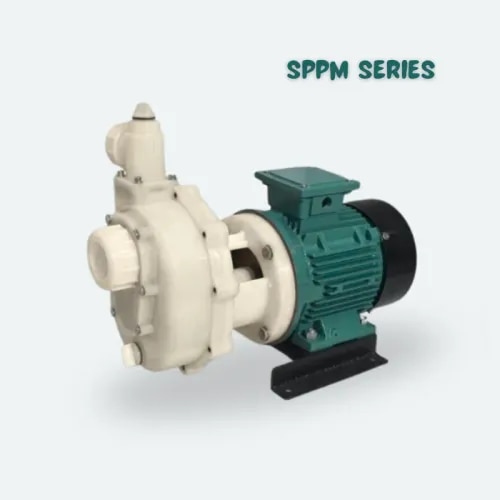
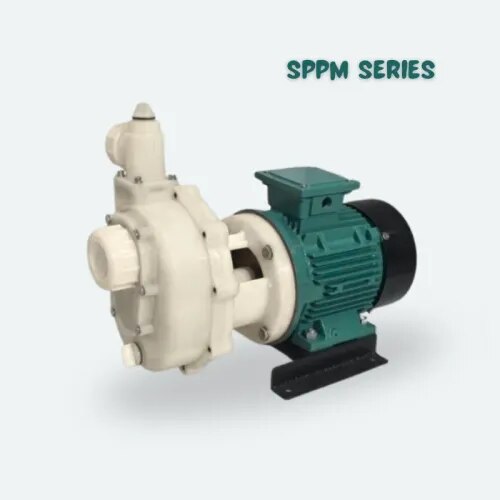
The PP Self-Priming Pump is a polypropylene centrifugal pump designed for applications where self-priming capability and resistance to compatible chemicals are important. The self-priming configuration is useful in pumping systems where air may be present in the suction line or where the pump is installed above the liquid source.
Polypropylene construction can provide useful resistance to many acids, alkalis, and other compatible chemical liquids. However, the suitability of PP depends on the specific liquid, concentration, temperature, and operating conditions and should be confirmed before selection.
Denwell's official website specifically lists PP Self-Priming Pump within its self-priming pump category.
Key Features
Polypropylene (PP) construction
Self-priming centrifugal pump design
Suitable for compatible chemical and industrial liquids
Useful where air may be present in the suction line
Corrosion-resistant non-metallic construction
Suitable for industrial fluid transfer
Application-oriented pump selection
Designed for chemical and process applications
Available as part of Denwell's self-priming pump range
Manufactured and supplied by Denwell Fluid Controls
Applications
PP Self-Priming Pumps can be considered for suitable applications such as:
Chemical transfer
Chemical circulation
Acid and alkali transfer
Surface treatment systems
Electroplating applications
Industrial liquid transfer
Water treatment
ETP and STP systems
Process-liquid handling
General chemical processing
The exact application should be evaluated according to chemical compatibility, concentration, temperature, flow, head, and suction conditions.
Q&A – PP Self-Priming Pump
1. What is a PP Self-Priming Pump?
A PP Self-Priming Pump is a polypropylene centrifugal pump designed to establish suction under suitable operating conditions without requiring repeated manual priming.
2. What does PP mean in a PP Self-Priming Pump?
PP stands for Polypropylene. It is a non-metallic engineering material commonly selected for applications where resistance to particular chemicals and corrosive environments is required.
3. How does a PP Self-Priming Pump work?
The pump uses a self-priming casing and impeller arrangement to remove air from the suction line and establish liquid flow. Once the pump is properly primed, it operates as a centrifugal pump.
4. What is the advantage of a self-priming pump?
A self-priming configuration can simplify installations where the pump is positioned above the liquid level or where air can enter the suction line. It can reduce the need for repeated manual priming when operated within its intended conditions.
5. Why is polypropylene used for chemical pumps?
Polypropylene can offer resistance to many acids, alkalis, and other compatible chemicals. The actual suitability depends on the chemical composition, concentration, temperature, and other operating conditions.
6. Can a PP Self-Priming Pump handle corrosive chemicals?
It can be suitable for compatible corrosive liquids. However, chemical compatibility should be checked before selecting the pump, including the PP material, seals, gaskets, temperature, concentration, and other wetted components.
7. Where are PP Self-Priming Pumps used?
They can be considered for chemical processing, chemical transfer, water treatment, surface treatment, electroplating, ETP/STP systems, and other compatible industrial fluid-handling applications.
8. Is the PP Self-Priming Pump suitable for water?
PP construction can be used for suitable water-transfer applications. The final selection should be based on the required flow, head, temperature, suction arrangement, and operating conditions.
9. Can a PP Self-Priming Pump be used for acid transfer?
It may be suitable for specific acids when the PP construction and other wetted components are chemically compatible. The exact acid, concentration, temperature, and operating conditions should be provided for proper pump selection.
10. How do I select the right PP Self-Priming Pump?
Important parameters include flow rate, total head, suction lift, liquid type, chemical concentration,
Mud Pump (Self-Priming Mud Handling) – Denwell Fluid Controls
Denwell Fluid Controls lists the Mud Pump (Self-Priming Mud Handling) as one of its dedicated products under the Self-Priming Pumps category, alongside SS Self-Priming Pump, PP Self-Priming Pump, CI Self-Priming Pump, and Chemical Self-Priming Pump.
Mud Pump (Self-Priming Mud Handling)
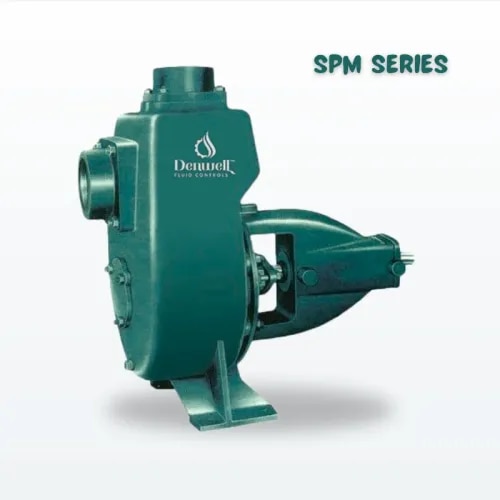
The Mud Pump (Self-Priming Mud Handling) is designed for applications involving mud, sludge, and other challenging fluid-handling conditions where self-priming capability is required.
Its self-priming configuration is intended for pumping applications where air may be present in the suction line or where the pump installation requires the pump to establish suction without repeated manual priming.
The pump can be considered for industrial applications involving mud and sludge transfer, drainage, wastewater-related handling, and other suitable fluid-transfer duties. Final pump selection should be based on the actual characteristics of the material, including solids content, viscosity, temperature, flow requirement, head, and suction conditions.
Denwell officially categorizes this product under its Self-Priming Pumps range.
Key Features
Self-priming mud-handling pump
Designed for mud and challenging fluid transfer
Suitable for applications where air may be present in the suction line
Robust industrial pump configuration
Suitable for sludge and mud-handling applications
Designed for industrial fluid-transfer requirements
Application-specific pump selection
Part of Denwell Fluid Controls' Self-Priming Pump range
Suitable for demanding pumping environments
Applications
The Mud Pump (Self-Priming Mud Handling) can be considered for applications such as:
Mud transfer
Sludge transfer
Wastewater handling
Drainage applications
Industrial waste handling
Slurry-related fluid transfer
Construction-site water and mud handling
Industrial process-fluid handling
ETP-related applications
General heavy-duty fluid transfer
The exact suitability depends on the solids concentration, particle size, viscosity, temperature, required flow and head, and other operating conditions.
Q&A – Mud Pump (Self-Priming Mud Handling)
1. What is a Mud Pump (Self-Priming Mud Handling)?
It is a self-priming pump designed for applications involving mud and other difficult-to-handle fluids. It is listed by Denwell Fluid Controls under its Self-Priming Pumps category.
2. What does self-priming mean in a mud pump?
Self-priming means the pump is designed to establish suction under suitable operating conditions without requiring repeated manual priming after every start.
3. Where is a self-priming mud pump used?
It can be considered for mud transfer, sludge handling, wastewater-related applications, drainage, industrial waste handling, and other suitable heavy-duty fluid-transfer applications.
4. Can a Mud Pump handle sludge?
A pump specifically selected for sludge handling can be used for suitable sludge-transfer applications. The actual pump must be selected according to sludge viscosity, solids concentration, particle size, temperature, flow and head requirements.
5. Can this pump handle fluids containing solids?
It may be suitable for selected fluids containing solids, but the acceptable solids concentration and particle size depend on the specific pump design. These parameters should be confirmed before selection.
6. What is the advantage of a self-priming mud-handling pump?
The self-priming arrangement can simplify pumping systems where air can enter the suction line or where the pump is installed above the liquid source.
7. Can a Mud Pump be used for wastewater?
It can be considered for suitable wastewater-handling applications. Where wastewater contains significant solids, fibrous material, or abrasive particles, the pump should be selected specifically for those conditions.
8. Is the Mud Pump suitable for industrial applications?
Yes. Denwell lists the Mud Pump (Self-Priming Mud Handling) within its industrial Self-Priming Pump product range.
9. What factors should be considered when selecting a Mud Pump?
Important factors include:
Required flow rate
Total head
Mud/sludge viscosity
Solids concentration
Particle size
Liquid temperature
Suction lift
Piping arrangement
Operating hours
Abrasiveness of the pumped material
10. Can the Mud Pump be used for ETP applications?
It may be considered for suitable effluent-treatment applications involving mud, sludge, or compatible waste fluids. The exact pump selection should be based on the characteristics of the material being pumped.