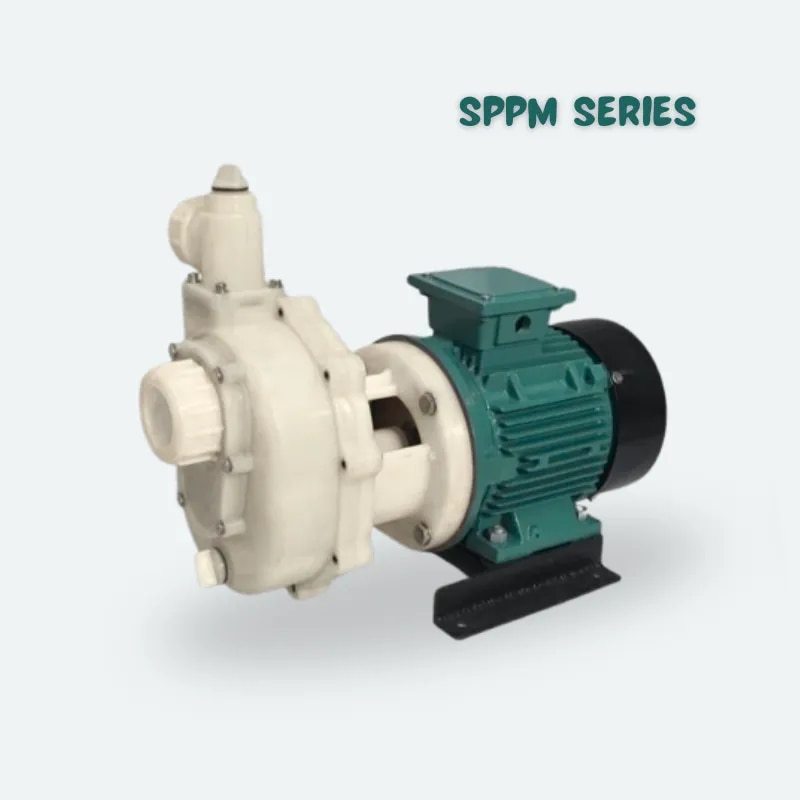
PP Self-Priming Pump
Description
PP Self-Priming Pump – Denwell Fluid Controls
Denwell Fluid Controls lists the PP Self-Priming Pump as part of its self-priming pump range, alongside SS, CI, mud-handling, and chemical self-priming pump options. The company describes itself as a manufacturer and exporter of industrial pumps and valves serving applications including chemical processing, water treatment, food & beverage, and other industrial sectors.
PP Self-Priming Pump
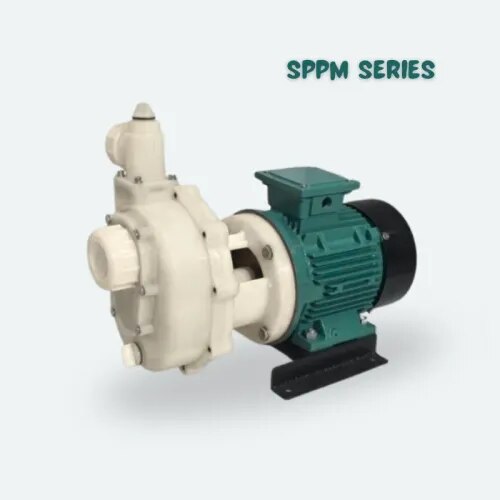
The PP Self-Priming Pump is a polypropylene centrifugal pump designed for applications where self-priming capability and resistance to compatible chemicals are important. The self-priming configuration is useful in pumping systems where air may be present in the suction line or where the pump is installed above the liquid source.
Polypropylene construction can provide useful resistance to many acids, alkalis, and other compatible chemical liquids. However, the suitability of PP depends on the specific liquid, concentration, temperature, and operating conditions and should be confirmed before selection.
Denwell's official website specifically lists PP Self-Priming Pump within its self-priming pump category.
Key Features
Polypropylene (PP) construction
Self-priming centrifugal pump design
Suitable for compatible chemical and industrial liquids
Useful where air may be present in the suction line
Corrosion-resistant non-metallic construction
Suitable for industrial fluid transfer
Application-oriented pump selection
Designed for chemical and process applications
Available as part of Denwell's self-priming pump range
Manufactured and supplied by Denwell Fluid Controls
Applications
PP Self-Priming Pumps can be considered for suitable applications such as:
Chemical transfer
Chemical circulation
Acid and alkali transfer
Surface treatment systems
Electroplating applications
Industrial liquid transfer
Water treatment
ETP and STP systems
Process-liquid handling
General chemical processing
The exact application should be evaluated according to chemical compatibility, concentration, temperature, flow, head, and suction conditions.
Q&A – PP Self-Priming Pump
1. What is a PP Self-Priming Pump?
A PP Self-Priming Pump is a polypropylene centrifugal pump designed to establish suction under suitable operating conditions without requiring repeated manual priming.
2. What does PP mean in a PP Self-Priming Pump?
PP stands for Polypropylene. It is a non-metallic engineering material commonly selected for applications where resistance to particular chemicals and corrosive environments is required.
3. How does a PP Self-Priming Pump work?
The pump uses a self-priming casing and impeller arrangement to remove air from the suction line and establish liquid flow. Once the pump is properly primed, it operates as a centrifugal pump.
4. What is the advantage of a self-priming pump?
A self-priming configuration can simplify installations where the pump is positioned above the liquid level or where air can enter the suction line. It can reduce the need for repeated manual priming when operated within its intended conditions.
5. Why is polypropylene used for chemical pumps?
Polypropylene can offer resistance to many acids, alkalis, and other compatible chemicals. The actual suitability depends on the chemical composition, concentration, temperature, and other operating conditions.
6. Can a PP Self-Priming Pump handle corrosive chemicals?
It can be suitable for compatible corrosive liquids. However, chemical compatibility should be checked before selecting the pump, including the PP material, seals, gaskets, temperature, concentration, and other wetted components.
7. Where are PP Self-Priming Pumps used?
They can be considered for chemical processing, chemical transfer, water treatment, surface treatment, electroplating, ETP/STP systems, and other compatible industrial fluid-handling applications.
8. Is the PP Self-Priming Pump suitable for water?
PP construction can be used for suitable water-transfer applications. The final selection should be based on the required flow, head, temperature, suction arrangement, and operating conditions.
9. Can a PP Self-Priming Pump be used for acid transfer?
It may be suitable for specific acids when the PP construction and other wetted components are chemically compatible. The exact acid, concentration, temperature, and operating conditions should be provided for proper pump selection.
10. How do I select the right PP Self-Priming Pump?
Important parameters include flow rate, total head, suction lift, liquid type, chemical concentration,